Amazon’s Leadership Principles

  1. Customer Obsession – Leaders start with the customer and work backwards. They work vigorously to earn and keep customer trust. Although leaders pay attention to competitors, they obsess over customers.
  2. Ownership – Leaders are owners. They think long term and don’t sacrifice long-term value for short-term results. They act on behalf of the entire company, beyond just their own team. They never say “that’s not my job”. 
  3. Invent and Simplify – Leaders expect and require innovation and invention from their teams and always find ways to simplify. They are externally aware, look for new ideas from everywhere, and are not limited by “not invented here”. As we do new things, we accept that we may be misunderstood for long periods of time.
  4. Are Right, A Lot – Leaders are right a lot. They have strong judgment and good instincts. They seek diverse perspectives and work to disconfirm their beliefs.
  5. Learn and Be Curious – Leaders are never done learning and always seek to improve themselves. They are curious about new possibilities and act to explore them.
  6. Hire and Develop the Best – Leaders raise the performance bar with every hire and promotion. They recognize exceptional talent, and willingly move them throughout the organization. Leaders develop leaders and take seriously their role in coaching others. We work on behalf of our people to invent mechanisms for development like Career Choice.
  7. Insist on the Highest Standards – Leaders have relentlessly high standards – many people may think these standards are unreasonably high. Leaders are continually raising the bar and driving their teams to deliver high quality products, services and processes. Leaders ensure that defects do not get sent down the line and that problems are fixed so they stay fixed.
  8. Think Big – Thinking small is a self-fulfilling prophecy. Leaders create and communicate a bold direction that inspires results. They think differently and look around corners for ways to serve customers.
  9. Bias for Action – Speed matters in business. Many decisions and actions are reversible and do not need extensive study. We value calculated risk taking.
  10. Frugality – Accomplish more with less. Constraints breed resourcefulness, self-sufficiency and invention. There are no extra points for growing headcount, budget size or fixed expense.
  11. Earn Trust – Leaders listen attentively, speak candidly, and treat others respectfully. They are vocally self-critical, even when doing so is awkward or embarrassing. Leaders do not believe their or their team’s body odor smells of perfume. They benchmark themselves and their teams against the best.
  12. Dive Deep – Leaders operate at all levels, stay connected to the details, audit frequently, and are skeptical when metrics and anecdote differ. No task is beneath them.
  13. Have Backbone; Disagree and Commit – Leaders are obligated to respectfully challenge decisions when they disagree, even when doing so is uncomfortable or exhausting. Leaders have conviction and are tenacious. They do not compromise for the sake of social cohesion. Once a decision is determined, they commit wholly.
  14. Deliver Results – Leaders focus on the key inputs for their business and deliver them with the right quality and in a timely fashion. Despite setbacks, they rise to the occasion and never settle.

From https://principles.design/examples/amazon-s-leadership-principles
Agile Manifesto

We are uncovering better ways of developing
software by doing it and helping others do it.
Through this work we have come to value:

Individuals and interactions over processes and tools
Working software over comprehensive documentation
Customer collaboration over contract negotiation
Responding to change over following a plan

That is, while there is value in the items on
the right, we value the items on the left more.

And the principles behind the agile manifesto are:

Our highest priority is to satisfy the customer
through early and continuous delivery
of valuable software.

Welcome changing requirements, even late in
development. Agile processes harness change for
the customer’s competitive advantage.

Deliver working software frequently, from a
couple of weeks to a couple of months, with a
preference to the shorter timescale.

Business people and developers must work
together daily throughout the project.

Build projects around motivated individuals.
Give them the environment and support they need,
and trust them to get the job done.

The most efficient and effective method of
conveying information to and within a development
team is face-to-face conversation.

Working software is the primary measure of progress.

Agile processes promote sustainable development.
The sponsors, developers, and users should be able
to maintain a constant pace indefinitely.

Continuous attention to technical excellence
and good design enhances agility.

Simplicity–the art of maximizing the amount
of work not done–is essential.

The best architectures, requirements, and designs
emerge from self-organizing teams.

At regular intervals, the team reflects on how
to become more effective, then tunes and adjusts
its behavior accordingly.

From http://agilemanifesto.org/

Why Corporate Apps Fail

Have you ever found yourself saying things like:

  • Why are enterprises so slow?
  • How do they decide what to buy?
  • Why is it so hard to deliver things in an enterprise?

I worked for a large ‘enterprise’ organisation for a few years trying to deliver infrastructure software change, and found myself having to explain these things to developers who worked there, salespeople, external open source engineers, software engineers who worked for enterprise vendors, and even many, many people within that organisation.

A few of those people suggested I write these explanations up so that they could pass it on to their fellow salespeople/engineers etc..

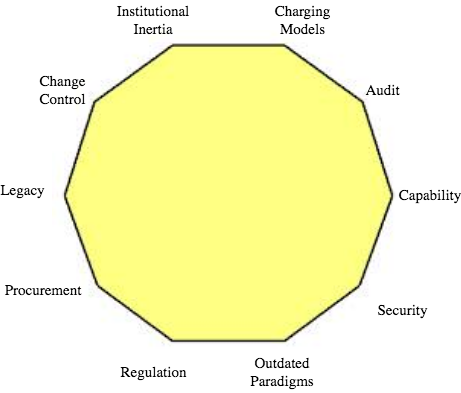
The polygon of Enterprise despair

From https://zwischenzugs.com/2018/10/02/why-are-enterprises-so-slow/

Towards better meetings

Meetings can be fantastic or terrible. I’ve experienced some serious pros run meetings, and when they do, everyone feels great afterwards. Everyone feels like progress was made, that things are clearer than before, that there is continued momentum.

(This is a note I sent to my team of Product Managers, Designers and Researchers at Intercom)

Meetings are expensive. Consider the opportunity cost of people being at a meeting – they could all be doing other important things. Treat other people’s calendars as a scarce resource and know that an empty calendar is an awesome place to be in because you are free to do your own work.

I consider any structured conversation between two or more people as a meeting. Today, at Intercom, we don’t do a great job of running meetings. We’re neither terrible or fantastic, but I want us to get way better. This is simply a process problem; it is entirely within our control. There are clear best practices in running great meetings. This is mostly a solved problem.

This is how we should be running meetings and you should hold your colleagues accountable to this standard.

Meetings must have one owner

This person runs the meeting.

They are responsible for the attendees staying on topic.

They are responsible for ensuring the meeting starts on time.

They are responsible for ensuring the meeting is on track, in the time remaining, to accomplish the goals set out at the start.

If you walk into a meeting and it isn’t clear who the owner is, feel free to leave and go do something more valuable for the company.

Meetings start by sharing the required output

The meeting owner starts the meeting by saying what the goal of the meeting is. For example, “We need a decision on whether to pursue option A or option B”.

The meeting owner clearly defines the boundaries of the topic. For example, “We don’t want UI feedback today. We need to only discuss concept design so we can decide between option A or option B”.

Meetings end with very clear action items, each of which has one owner and a due date

As a meeting progresses, the meeting owner collects and writes down any decisions made, action items, owners and due dates.

The last act of the meeting is for the meeting owner to read out the decisions made, and the action items and owners. This is to ensure nothing has been misunderstood.

The meeting owner must then email the list of decisions and action items to all meeting attendees to really ensure nothing has been misunderstood, and to ensure we have accountability.

If the due date is not going to be met, it is the responsibility of the action item owner to let others know.

Other best practices

If a meeting concludes before the time allotted, end the meeting and leave! Don’t try to fill the time with other random top of mind topics.

If you are in a meeting and feel you don’t need to be there, let people know, and unless anyone wants you to stay, then get up and leave. No-one is going to be offended.

Feel empowered to decline meetings that you don’t think you should be at, or don’t know what they are for. Don’t ever just show up to a meeting without knowing what it is going to be about.

Meetings should never be the reason a decision is unnecessarily delayed. Don’t wait for a meeting when a decision is needed. If you need feedback or help, make that happen before some standing meeting.

Finally, your time is precious and expensive; ensure good meetings are being run. Your colleagues owe you that, and everyone wins.

From https://www.intercom.com/blog/towards-better-meetings/

Learn to spot Unicorns

Horns, horses and wings exist.

Unicorns do not.

Just because you can talk about “proactive infrastructure”, a “dynamically configurable platform”, or “contextually aware flow routing”, doesn’t mean they exist.

There are a lot of folk out there selling Unicorn architectures.

Learn to subject proposed architectures to common-sense, plain-English reality checks.

Start with Why

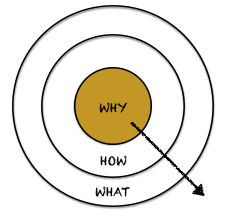
Every leader and company knows the WHAT. They can describe their products, their industry, and their competitors. Some companies also know HOW they do WHAT they do — their unique differentiators, their value proposition, and their values. But few companies know or articulate their WHY — their purpose, their cause or their belief. The WHY is their reason for being. And the WHY is why anyone should care.

Since the WHAT is the easiest to know and articulate, most leaders and companies start with WHAT. Sometimes they will also discuss HOW, but they rarely talk about WHY. With respect to the Golden Circle, they go outside-in.

Simon advocates that we should invert the order. Go from the inside-out in the Golden Circle. Start with WHY, discuss the HOW, and end with WHAT.

The right way to inspire is to communicate inside-out

As Simon writes:

“When most organizations or people think, act or communicate they do so from the outside in, from WHAT to WHY. And for good reason — they go from clearest thing to the fuzziest thing. We say WHAT we do, we sometimes say HOW we do it, but we rarely say WHY we do WHAT we do.”

“When communicating from the inside out, however, the WHY is offered as the reason to buy and the WHATs serve as the tangible proof of that belief.”

From https://medium.com/leadership-motivation-and-impact/the-power-of-starting-with-why-f8e491392ef8

7 Key Enterprise Architecture Metrics

Enterprise Architecture is still an emerging field. There are not many organizations today that are effectively measuring their EA program with metrics. Here are a few metrics that might work:

IT Total Cost of Ownership (TCO) as a Percentage of Revenue
One of EA’s value propositions is reducing costs by leveraging common solutions and rationalizing processes, technology and data.
This metric is key to the business value achieved by the IT stack. It has appeal to business stakeholders and allows IT costs to be compared with industry or regional averages.
Example: The total cost of ownership of IT is 4.8% of revenue.

Total Cost Savings (TCS)
Often EA is able to achieve cost savings by:

  • retiring a legacy system 

  • consolidating licensing 

  • introducing common shared services 

  • rationalizing infrastructure investment 
etc…
    If the EA team can deliver cost savings on a regular basis — Total Cost Savings is a meaningful metric for EA.
    Example: EA initiatives saved the organization 5.2 million dollars this quarter.

Percentage Of Spend That’s Strategic (PSTS)
The EA team assesses all projects and designates them as tactical or strategic. The percentage of the total IT spend that was considered strategic can then be calculated using project budget information.
PSTS is a good predictor of the long term heath and efficiency of IT. However, it may be of little interest to the business.
Example: 47% of project spending went to strategic projects this quarter.

Common Services Compliance Rate (CSCR)
Enterprise Architecture often defines common services such as ESB, BPM, Infrastructure platforms etc… The CSCR measures the percentage of new projects that are fully compliant with the common service roadmap.
Example: 67% of projects complied with EA’s common service strategy this year.

Architectural Due Diligence Rate (ADDR)
The percentage of projects that are fully compliant with the EA governance 2 process. A EA governance process involves steps such as updating EA blueprints, architectural reviews and macro design.
ADDR is a good metric for reporting violations of the EA process. It is often helpful to report ADDR by business unit, technology silo or project manager — to highlight problem areas.
Example: 78% of operations department projects complied with EA governance but only 12% of sales department projects were in compliance.

Sunset Technology (ST)
Percentage of the technology stack that is considered sunset by EA. Measures IT’s ability to introduce strategic technology and retire legacy systems.
Example: At the end of the year 54% of production systems were deemed sunset technologies. This compares with 62% last year.

Business Specific
Manage EA with specific metrics aligned with your business strategy and goals. Examples include:

  • reducing time to market for launching new products 

  • reducing human error rates 

  • speeding up order delivery 

  • reducing IT costs 

  • reducing severity and frequency of security incidents
    Example: average time to market for introducing a new product decreased from 5.8 months last year to 4.9 months this year.
    Significant and measurable business goals that require EA support make good EA metrics.

The 3 Types of EA Metrics

There are 3 fundamental ways to measure the performance of your EA team:

1. Measure IT
IT metrics are well established — ROI, Total Cost of Ownership, Mean Time to Repair (MTTR) etc..

Such IT metrics are SMART and appeal to the business. They are good measures for IT — but do they translate to EA?

In theory the EA team should be able to increase ROI for IT, reduce Total Cost of Ownership etc… However, there are many factors affecting these measures. The correlation between EA performance and IT metrics may be low.

2. Measure EA Governance
It is relatively easy to measure the success of IT governance. What percentage of projects complied with governance? What percentage of projects were rejected? The problem with these metrics is that they lack appeal for the business.

It is not obvious how governance metrics translate into competitive advantage, customer experience or cost savings.

3. Measure EA Itself
Measuring EA directly is the ideal way to score the EA team. The problem is it is tricky to develop such metrics. The EA team collaborates with business, solution and governance teams.

The fact is that it is difficult to assign a number to collaborative long term planning activities such as EA.